
Your student visa is nearly up and you’re not ready to go home. Fair enough. There are still ways to stay, but the rules have changed a lot in the last two years, and again on 2 October 2026.
Here are the six main options for 2026, what each one costs, and which changes are law and which have only been announced.
Short version
- Start early. Most of these options need a sponsor, a skills assessment or a lot of paperwork, and that takes weeks or months.
- Another student visa is harder to get from inside Australia. Since 2 October 2026, most student visa holders can only apply for a new one in Australia if they meet an exemption, such as moving up to a higher-level course. Everyone else has to apply from outside Australia.
- The graduate visa (485) is still the next step for many. It’s 2 years after a bachelor’s or coursework master’s and 3 years after a research master’s or PhD, if you’re 35 or under.
- Employer sponsorship now means the Skills in Demand visa (482). It replaced the old Temporary Skill Shortage visa in December 2024.
- Partner visas cost $11,710 from 1 July 2026. You usually need 12 months as a de facto couple, unless you register your relationship.
- Announced but not law yet: a ballot for second and third working holiday visas, “No Further Stay” on all future visitor visas, and no family members on graduate visas.


Get matched with a MARA-registered migration agent on our visa page. Irish Around Oz readers get 20% off with the code IRISHAROUNDOZ.
First, the big change on 2 October 2026
Since 2 October 2026, most people on a temporary visa in Australia can’t apply for a student visa while they’re here. That includes Working Holiday (417 and 462), Skills in Demand (482), Temporary Graduate (485), Training (407), Temporary Activity (408) and Visitor visa holders. They have to apply from outside Australia and be outside Australia when the visa is granted.
If you’re on a student visa now, you can only apply for another one in Australia if you fit one of six exemptions. They’re listed under Option 6.
Students also can’t include a partner or children in a new student visa application any more unless they’re exempt (PhD students, for example), and family members can’t be added after the visa is granted.
Your current visa isn’t affected, and applications lodged before 2 October 2026 are assessed under the old rules.
In practice, that means you should pick your next visa carefully. Some options close doors behind them: once you’re on a 485, 482 or 407, you can’t switch back to a student visa from inside Australia.
Option 1: Apply for a partner visa
- Met someone special while you were studying? If they’re an Australian citizen, permanent resident or eligible New Zealand citizen, a partner visa could be your best bet. You apply for the temporary (820) and permanent (801) visas together, and you need to be in Australia when you apply.
- De facto couples usually need to have been in the relationship for at least 12 months immediately before applying. Time spent just dating might not count.
- You don’t always need the 12 months. If you register your relationship in NSW, Victoria, Queensland, South Australia, Tasmania or the ACT, the 12-month rule doesn’t apply. WA and the NT don’t have a register that counts for this. The rule also doesn’t apply if you can show compelling and compassionate circumstances.
- It costs $11,710 for the main applicant from 1 July 2026. It’s also slow. In October 2026, the official guide said 50% of onshore applications were decided within 22 months and 90% within 30 months.
- Check your current visa in VEVO for a “No Further Stay” condition such as 8503. If you have one, you can’t apply in Australia unless you get a waiver first.
- Hoping to be added to your partner’s student or graduate visa instead? Students can’t add partners since 2 October 2026, and the government has announced it will do the same for graduate visas.
Read our Australian partner visa myths guide here.
Option 2: Get sponsored on a Skills in Demand visa (482)
- Is your employer offering sponsorship? The 482 is now the Skills in Demand visa. It replaced the Temporary Skill Shortage visa on 7 December 2024, so the old short-term and medium-term occupation lists are gone.
- There are three streams. Core Skills: your job must be on the Core Skills Occupation List and pay at least the market rate and the Core Skills Income Threshold, which is $79,423 from 1 July 2026. Specialist Skills: for higher-paid roles in eligible occupations, paying at least $146,576. Labour Agreement: for employers who have a labour agreement with the government.
- You need at least 1 year of relevant work experience in the last 5 years. Part-time or casual work counts if it adds up to 12 months full-time, and some internships, placements and apprenticeships done during your studies can count too.
- Some occupations need a skills assessment before you can apply.
- Your employer usually has to advertise the job in Australia first. This is called labour market testing. The ads have to run for at least 4 weeks within the 4 months before your employer nominates you, so leave plenty of time. This isn’t a last-minute option.
- The visa lasts up to 4 years and costs from $4,015. You work for your sponsor, and if you lose your job you have up to 180 days to find a new sponsor or make plans to leave.
- If you apply in Australia before your student visa ends, you’ll usually be on a bridging visa while you wait for a decision. Our bridging visa guide explains what that means for work.
- Later on, your employer may be able to sponsor you for permanent residence through the Employer Nomination Scheme (subclass 186).
Get matched with a MARA-registered migration agent on our visa page.
Option 3: Apply for a training visa (407)
- Not eligible for a 482? Don’t stress! You might be able to get a Training visa (407). It’s for structured, workplace-based training to improve your skills in your job, your area of study or your field. It isn’t meant for filling job vacancies.
- You need an approved sponsor and, in most cases, an approved nomination for your training program. Since 11 March 2026, both have to be approved before you can lodge your visa application, so give your sponsor plenty of time.
- You can stay for up to 2 years. It costs from $535.
- You train with your sponsor. If you want to train with a different organisation, it has to sponsor and nominate you.
- All work on this visa must be paid at least the minimum wage.
- You need functional English.
- Keep in mind that 407 holders can’t apply for a student visa from inside Australia.
Option 4: Apply for a graduate visa (485)

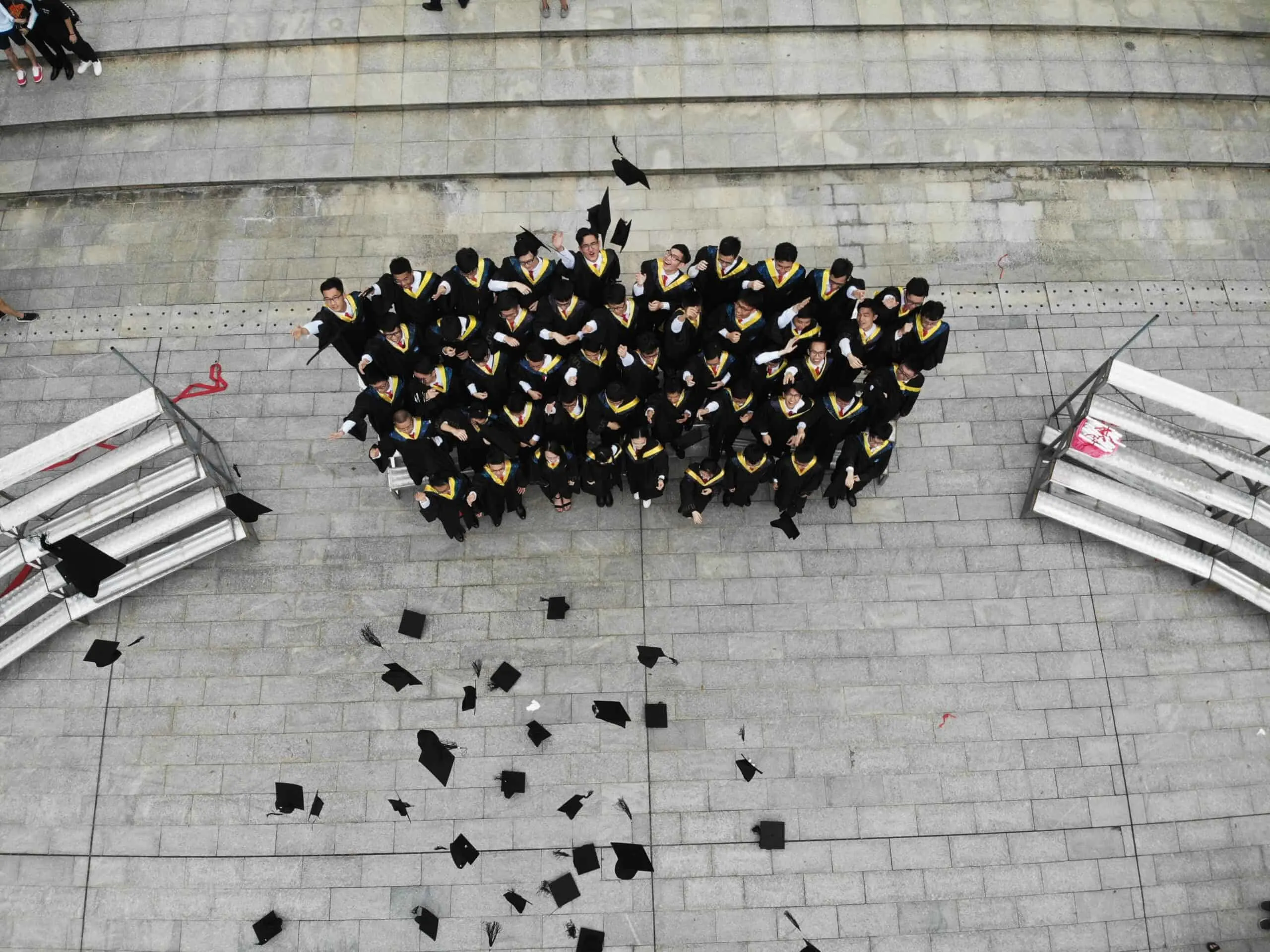
- If you’ve just finished your course, you might be able to get a Temporary Graduate visa (485). You apply in Australia, within 6 months of finishing your course, and you must have held a student visa in the last 6 months.
- The rules changed on 1 July 2024. You must now be 35 or under when you apply, or under 50 if you’re applying with a research master’s or a PhD.
- Post-Higher Education Work stream: 2 years after a bachelor’s or coursework master’s, and 3 years after a research master’s or PhD. The old four-year stay after a PhD is gone for Irish graduates.
- Post-Vocational Education Work stream: up to 18 months for diploma, associate degree or trade graduates. Your occupation must be on the Medium and Long-term Strategic Skills List, and you need a skills assessment.
- Irish passport holders don’t need to sit an English test for the 485. Your passport is the evidence.
- For the degree stream, your job doesn’t need to be on a list.
- It costs $5,750. You can only hold a 485 as the main applicant once.
- If you studied and lived in a regional area, you might be able to get a second 485 through the Second Post-Higher Education Work stream.
- Remember that since 1 July 2024, 485 holders can’t apply for a student visa from inside Australia.
- For now, you can still include your partner and children. The government announced on 17 September 2026 that it will stop adding family members to graduate visas, but there’s no start date yet.
Option 5: Apply for PR
- Australian PR is the holy grail for a lot of people, so if you’re eligible after studying, it makes sense to look at it.
- The main skilled visas are the Skilled Independent (189), Skilled Nominated (190) and Skilled Work Regional (491) visas. They’re invitation only. You lodge an Expression of Interest in SkillSelect and wait to be invited.
- For the 189, you need an occupation on the relevant list, a suitable skills assessment, at least competent English and at least 65 points. You must be under 45 when you’re invited. The 190 and 491 have extra nomination requirements.
- Skills assessments take time, so you’ll be rushing if you leave it until your student visa is about to run out.
- You can be in or outside Australia when you apply for a 189, so you don’t have to leave the country to apply.
- If time is tight, a common route is to get a 485 first, build up work experience and points, and then apply for PR. Another is employer sponsorship: a 482 now, and the 186 later.
Option 6: Keep studying
- If you’re loving student life and can’t get enough beans on toast and daytime telly, you can keep going. But since 2 October 2026, you can only apply for another student visa from inside Australia if one of these applies to you:
- you need up to 12 more months to finish your main course, with the same education provider
- you’ve finished your main course and you’re moving up to a course at a higher AQF level, like going from a bachelor’s to a master’s
- you’re applying to study a PhD (a research master’s doesn’t count for this one)
- you’re going to primary or secondary school, or moving from school, or from a course without an AQF level, into further study
- you’re sponsored by the Department of Foreign Affairs and Trade or Defence
- your education provider has defaulted and you can’t continue your course
- If none of those fit, you have to apply from outside Australia and be outside Australia when the visa is granted. For example, a second bachelor’s degree, or a vocational diploma after a degree, usually means applying from overseas.
- If your last course was a higher education course, your next one must also be a higher education course with a higher education provider.
- If you apply in Australia under an exemption, you can usually only include one further course. You can’t package courses together.
- You can’t bring a partner or children unless you’re exempt. The exemptions cover PhD students, students sponsored by DFAT or Defence, students on a foreign government scholarship, and eligible students from Pacific or ASEAN countries. Family already on your current student visa may be able to come with you onto your next one if you apply in Australia.
- The student visa costs from $2,500 from 1 July 2026.
- Thinking of changing provider? Since October 2026, a new provider generally can’t enrol you until you’ve completed 12 months of your main course (it used to be 6 months). Some exceptions apply.
- If your student visa runs out before your graduation ceremony, you might be able to get a visitor visa (600) to stay for it. You’ll need a letter from your provider with the graduation date.
Not sure which course or visa fits?
The new rules make picking the right course at the right level more important than ever. Study Destination, our student visa partner, can go through your options with you for free.
Other options worth knowing about
- Working Holiday visa. Irish passport holders can get a first Working Holiday visa (417) up to age 35. You have to apply from outside Australia and be outside Australia when it’s granted. Second and third years are set to move to a ballot, which has been announced but isn’t law yet. Our working holiday ballot guide has the details.
- Bridging visas. If you lodge a new visa application in Australia before your current visa ends, you’ll often get a bridging visa while you wait. Here’s what you need to know about working on a bridging visa.
- Everything else. Our visa options guide covers regional, skilled and other routes.
What each option costs (from 1 July 2026)
These are the government’s base charges for the main applicant. Family members, health checks, police certificates, skills assessments and agent fees cost extra.
| Visa | Main applicant charge |
|---|---|
| Partner visa (820/801) | $11,710 |
| Skilled Independent (189) | From $6,135 |
| Temporary Graduate (485) | $5,750 |
| Skills in Demand (482) | From $4,015 |
| Student (500) | From $2,500 |
| Training (407) | From $535 |
Prices change, usually every 1 July. Check the official Visa Pricing Estimator before you apply.
What’s law now, and what’s only been announced
On 17 September 2026, Home Affairs Minister Tony Burke announced a big package of migration changes. Some of it has already started. Some of it has no start date yet.
| Change | Status |
|---|---|
| Visitor visa and 485 holders can’t apply for a student visa in Australia | In force since 1 July 2024 |
| 485 age limit of 35 and shorter stays | In force since 1 July 2024 |
| Skills in Demand visa replaced the Temporary Skill Shortage visa | In force since 7 December 2024 |
| 407 sponsor and nomination must be approved before you apply | In force since 11 March 2026 |
| Higher visa charges and income thresholds | In force since 1 July 2026 |
| Most temporary visa holders must apply for a student visa from outside Australia, and students need an exemption to apply again onshore | In force since 2 October 2026 |
| Most students can’t include a partner or children, and can’t add them later | In force since 2 October 2026 |
| Ballot for second (45,000 places) and third (5,000 places) working holiday visas | Announced, no confirmed start date |
| “No Further Stay” condition on all future visitor visas | Announced, no confirmed start date |
| No family members on new graduate (485) visas | Announced, no confirmed start date |
| Switching courses to need a new student visa application | Announced, no confirmed start date |
The Minister said the visitor visa change will only apply to visas granted in future, not to people already here. We’ll update this post when the announced changes become law.
Don’t leave it to the last few weeks
If you’re confused and not sure which option’s best, our recommended migration agents can point you in the right direction. Use the code IRISHAROUNDOZ for 20% off.
Whatever you choose, start while you still have months left on your visa, not weeks. Best of luck ☘️
This post is general information, not migration advice. Visa rules change often, so check the official Home Affairs pages or talk to a registered migration agent before you apply. Irish Around Oz earns a referral fee from Study Destination if you enrol through them.
Last checked October 2026.
Sources
- Home Affairs: Changes to Student visa application rules (from 2 October 2026)
- Home Affairs: Student visa (subclass 500)
- Home Affairs: Temporary Graduate visa (subclass 485)
- Home Affairs: Skills in Demand visa (subclass 482)
- Home Affairs: Skilled visa income thresholds from 1 July 2026
- Home Affairs: Labour market testing
- Home Affairs: Training visa (subclass 407)
- Home Affairs: Partner visa (subclass 820)
- Home Affairs: Skilled Independent visa (subclass 189)
- Minister for Home Affairs: media release, 17 September 2026
- Minister for Home Affairs: Ending visa hopping, 12 June 2024
- Federal Register of Legislation: Student visa applications to be made from outside Australia (2026)