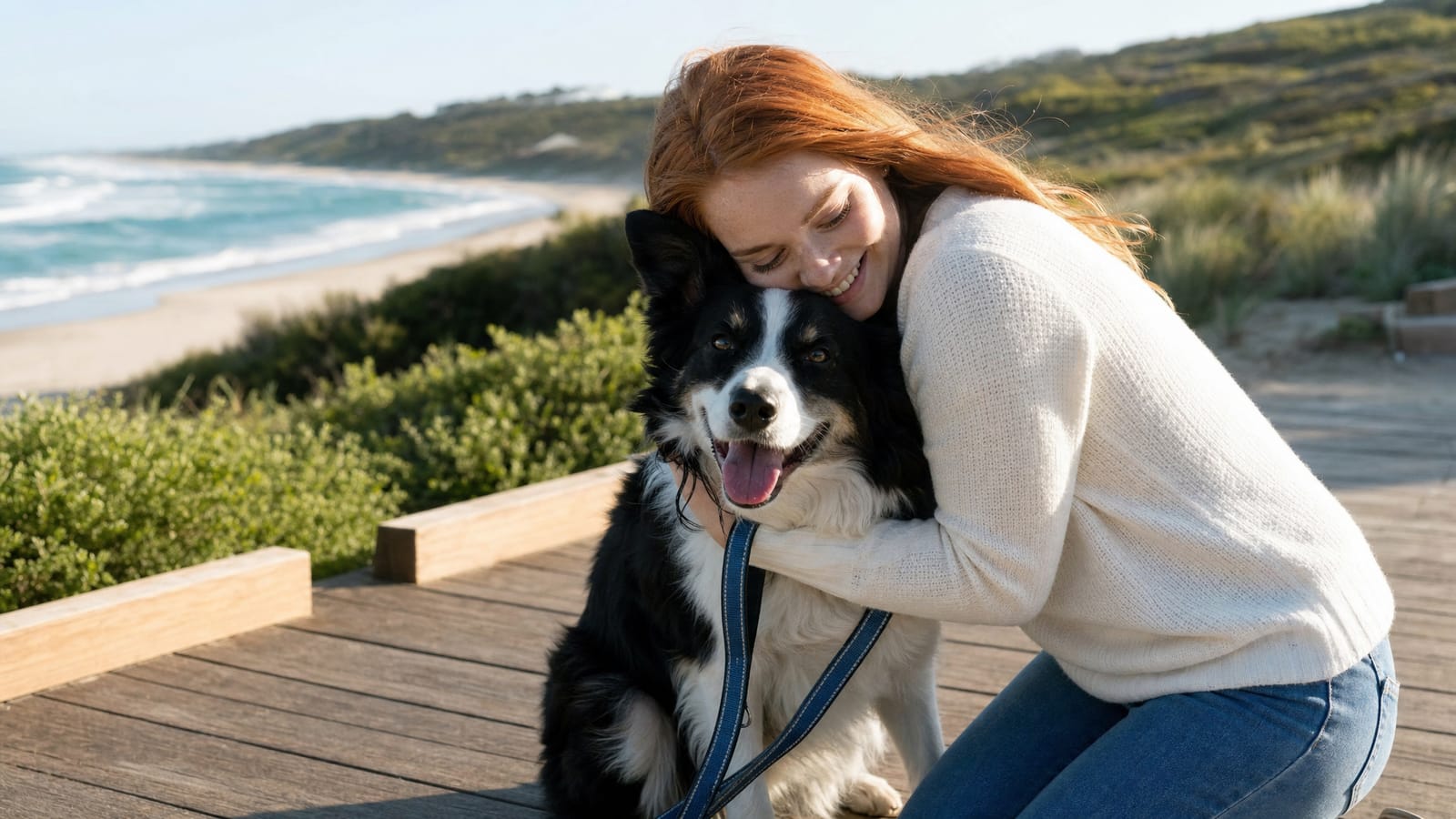
Yes, you can bring a dog from Ireland to Australia, but it’s a long road. Ireland is a Group 3 country, so your dog needs a rabies vaccine, a blood test called an RNATT and a wait of at least 180 days after the sample reaches the lab, then at least 10 days in quarantine in Melbourne. The Australian government says to allow at least 6 months, and from a standing start our sums come out closer to 7 or 8.
Everything below is as of November 2026. Import conditions can change without notice, so check the official pages we link before you pay for anything. Sorting the rest of the move too? Start with our complete guide to moving to Australia from Ireland and the moving to Australia checklist.
Short version
- Ireland is Group 3: rabies vaccine, RNATT and a 180 day wait, with no exceptions.
- Identity check first: an official vet must do it before the blood test, or quarantine is a minimum of 30 days instead of 10.
- Melbourne only: pets fly as cargo into Melbourne and go to the government’s Mickleham quarantine facility.
- Government fees: estimated at AUD 3,114 for one pet on 10 days, or AUD 4,234 on 30. Vets, flights and agents are extra.
- Cats: same rabies steps, fewer tests. Bengals and Savannahs are banned.
- Going home: no titre test for Ireland, but your pet still needs a chip, a rabies vaccine and a health certificate.
Can you bring a dog from Ireland to Australia?
Yes. Ireland is an approved country in Group 3, along with the UK, the US and most of the EU. The department describes Group 3 as countries where rabies is present but well controlled. This is the part to get exactly right, so here’s the current rule from the Group 3 guide for dogs:
- Rabies vaccine: given when your dog was at least 84 days old, and valid without a break from the RNATT to the date of export.
- RNATT blood test: taken 3 to 4 weeks after the vaccine. The result must be 0.5 IU/ml or more.
- The 180 day wait: your dog can’t be exported for at least 180 days after the RNATT sample arrives at the laboratory. That’s the arrival date, not the day the blood is taken, and the department says there are no exceptions.
- The 12 month limit: an RNATT is valid for 12 months from the blood draw, so the sample must be taken between 12 months and 180 days before export.
- Quarantine: a minimum of 30 days, cut to a minimum of 10 only if an official government vet verified your dog’s identity before the RNATT blood was taken.
The 180 days is a residency period, not quarantine. Your dog lives at home with you, or with someone else in an approved country, the whole time. So if you’re moving to Australia with a dog and need to fly first, the dog can stay with your mam and follow you later.
How to bring a dog from Ireland to Australia, step by step
The order matters, because a mistake can restart the 180 days. Your own vet does the preparation and your Department of Agriculture Regional Veterinary Office (RVO) does the official sign offs. The forms are on Ireland’s pet travel page.
- Microchip. It must be ISO compliant, and numbers starting with 999 aren’t accepted. If it can’t be read or is wrong on your documents, your dog can’t be imported.
- Identity check. Ask your local RVO, not the Live Trade office. It must come before the RNATT and can’t be done at the same visit. A pet passport, vaccination card or microchip certificate doesn’t count.
- Rabies vaccine. Then wait 3 to 4 weeks.
- RNATT blood test. Your vet takes the sample and sends it to a recognised lab. The 180 day clock starts when it arrives.
- RNATT declaration. Your vet completes Ireland’s RNATT form and your RVO signs it.
- Import permit. Apply through BICON as soon as you have the declaration. Most permits take 20 to 40 business days, but it can take up to 123.
- Quarantine and flights. Book these only after the permit is issued.
- Tests and treatments. Follow the countdown below.
- Final check and RVO stamp. Your vet completes two health certificates, then your RVO signs and stamps one, plus the lab reports. Contact your RVO at least 2 months before travel, because it may not be able to sign otherwise.
| Before export | What has to happen |
|---|---|
| 12 months to 14 days | Leptospira Canicola booster or final primary dose, if you vaccinate rather than test |
| Within 45 days | Negative tests for Leishmania infantum, for Brucella canis if not desexed, and for Leptospira Canicola if not vaccinated |
| Within 45 days | Two internal parasite treatments at least 14 days apart, the second within 5 days of export |
| At least 30 days | Start external parasite treatment and keep it going. NexGard, Bravecto and tick collars aren’t accepted |
| Within 5 days | Final vet exam, then RVO endorsement of the health certificate |
Watch the booster date. If the rabies vaccine lapses between the RNATT and export, your dog has to be revaccinated and retested, and the 180 days starts again.
Flights and quarantine in Melbourne
Your dog must arrive directly into Melbourne International Airport. Landing in Sydney and connecting on a domestic flight isn’t allowed. Pets travel as manifested cargo in an IATA approved crate, not in the cabin.
There are no direct flights between Ireland and Australia, so stops matter. Your dog can stay on the plane in any country, but can only change planes in an approved country, and you have to check that country’s rules. Dublin Airport stopped taking pets outbound as excess baggage in 2021, so ask your airline or agent how your pet will leave Ireland.
Once your quarantine booking is confirmed, your airline sends an OK to Forward request, which must be approved before departure. Mickleham accepts landings from 05:00 to 14:30, or to 21:00 Wednesday to Friday. Weekends, public holidays and landings after 14:30 cost extra.
Biosecurity officers take your dog from the airport to the Mickleham facility, where each pet gets its own climate controlled pen. You can’t visit, but you’ll get email updates. Toys and bedding in the crate are destroyed, so don’t pack them. You or your agent collect between 10:00 and 12:00 on the release date, so if you’re not settling in Melbourne, plan the final leg too. From December to February temperatures can pass 40°C, so talk to your vet about heat risk.
Cost of bringing a dog from Ireland to Australia
These are the published government fees, per animal, as of November 2026.
| Fee | AUD |
|---|---|
| Import permit, first pet | AUD 626 (minimum) |
| Import permit, each extra pet in the consignment | AUD 299 (minimum) |
| Quarantine reservation charge | AUD 282 |
| Importation charge | AUD 1,132 |
| Inspection, and document assessment | AUD 84 each per 30 minutes |
| Accommodation, AUD 56 a day | AUD 560 for 10 days, AUD 1,680 for 30 days |
| Airline terminal fee, per airway bill | AUD 170 (minimum) |
| Out of hours collection | AUD 176 weekdays, AUD 186 weekends and public holidays |
The department’s own estimate for one cat or dog is AUD 3,114 on a 10 day stay and AUD 4,234 on 30 days, so the identity check saves you AUD 1,120. The permit fee, reservation charge and importation charge are generally non-refundable.
Irish vet bills, lab tests, the crate, the flight and any agent come on top, and they vary too much to quote as fact. The department recommends an experienced agent and points to the IPATA directory. Get a few written quotes and ask whether each includes the crate, flight, vet and RVO visits, the fees above and collection from Mickleham.
Banned breeds, age and pregnancy limits
- Banned pure breeds: dogo Argentino, fila Brasileiro, Japanese tosa, American pit bull terrier or pit bull terrier, and Perro de Presa Canario.
- Banned hybrids: Czechoslovakian wolfdog, Saarloos wolfdog, Lupo Italiano and Kunming wolfdog.
- Mixed breeds: allowed if all other conditions are met, but Home Affairs may investigate if a dog looks like a prohibited breed after arrival.
- Pregnancy: your dog can’t be more than 30 days pregnant or nursing puppies at export.
- Young dogs: with a first vaccine at 84 days plus the waits, our sums put the earliest departure at about nine and a half months old.
- Older dogs: there’s no upper age limit, but the department doesn’t recommend importing sick or very old animals, and older pets count as special care.
Bringing a cat from Ireland to Australia
Most of the Group 3 guide for cats matches the dog process: microchip, identity check, rabies vaccine, RNATT, 180 days, permit, RVO paperwork, cargo into Melbourne and the same fees. The differences:
- No Leishmania, Brucella or Leptospira tests or vaccines.
- External parasite treatment starts at least 21 days before export, not 30.
- Vaccines for feline enteritis, rhinotracheitis and calicivirus are recommended, not mandatory.
- Hybrids are banned, including Savannah, Safari, Chausie and Bengal cats and their crossbred offspring.
Renting with a pet in Australia
You’ll need your landlord’s consent. In NSW, landlords have 21 days to respond to a pet application and can only refuse for certain reasons. In Victoria, they have 14 days and must apply to VCAT to refuse. In Queensland, they have 14 days and can only refuse for specific reasons. No response counts as approval in all three. Strata or body corporate rules may apply too, and your local council can tell you how to register your dog.
Moving a dog from Australia to Ireland
The trip home is simpler. Australia is on the EU’s list of countries whose pets don’t need a rabies antibody titration test, so there’s no blood test and no 90 day wait. Your pet still needs a rabies vaccine, even though Australia is rabies free. These are the EU rules for a pet moving with its owner, which changed on 22 April 2026:
- Microchip first. The vaccine date can’t come before the chip date.
- Rabies vaccine. Your pet must be at least 12 weeks old, and the vaccine only counts from 21 days after the primary course.
- Australian export paperwork. Send a Notice of Intention to your regional office at least 10 working days before departure. A registered vet does a final exam, then a department vet checks everything. Your pet must leave within 72 hours of the export permit being issued, and fees apply.
- EU animal health certificate. It’s valid for 10 days from issue, up to your arrival checks. Older model certificates only count if issued before 1 October 2026, so check your vet has the current one. You can’t use an EU pet passport if you’ve been living in Australia.
- Tapeworm treatment, dogs only. A vet must give it 24 to 120 hours before you arrive and record it on the certificate.
- Declaration and advance notice. Sign the non-commercial declaration and register your arrival on the Imports Portal before you travel.
- Approved entry point. Pets may only enter through Dublin Airport, Cork Airport, Shannon Airport, Dublin Port, Ringaskiddy or Rosslare, and they get a compliance check on arrival. Department staff work 07:00 to 21:00 at Dublin Airport.
Travel with your pet, or the rules change. The Irish portal says you or a designated person must be on the same flight, and if that’s a designated person you must travel within 5 days. A dog in the hold with you in the cabin is fine. A pet shipped unaccompanied can’t use pet travel rules and falls under the commercial import rules, which add a border control post, a registered holding and extra requirements for dogs and cats from Australia. Confirm your plan with [email protected] before you book, especially if your flight stops in a country that’s not on the EU list.
Ireland has also banned importing XL Bully type dogs since 1 October 2024. There’s a case by case exemption for returning residents who can prove they owned the dog before that date.
If you might come back, talk to Australia’s imports team before you leave, because an unprepared pet must wait 180 days to return. Keep your export health certificate too. For everything else on the way out, see our guides to moving home to Ireland and leaving Australia.
Thinking about bringing the dog? Ask in your local Irish group which vets and agents people would use again.
FAQ
Can you bring a dog from Ireland to Australia?
Yes. Ireland is an approved Group 3 country. Your dog needs a rabies vaccine, an RNATT, a 180 day wait, an import permit and quarantine at Mickleham.
How long does it take to bring a dog from Ireland to Australia?
The department says to allow at least 6 months. With no rabies vaccine yet, you’re looking at about 7 months at the very least.
How much does it cost to bring a dog from Ireland to Australia?
Government fees are estimated at AUD 3,114 for 10 days or AUD 4,234 for 30 days. Vet costs, flights and any agent are extra, so get quotes.
Can my dog fly in the cabin to Australia?
No. Pets travel as manifested cargo, although eligible assistance dogs may be exempt.
Does a dog going from Australia to Ireland need a rabies blood test?
No. Australia is on the EU’s list, so no titre test is needed, but a valid rabies vaccine is.
Can I use my dog’s EU pet passport to bring it home from Australia?
Not if you’ve been living in Australia. The EU says you need an animal health certificate.