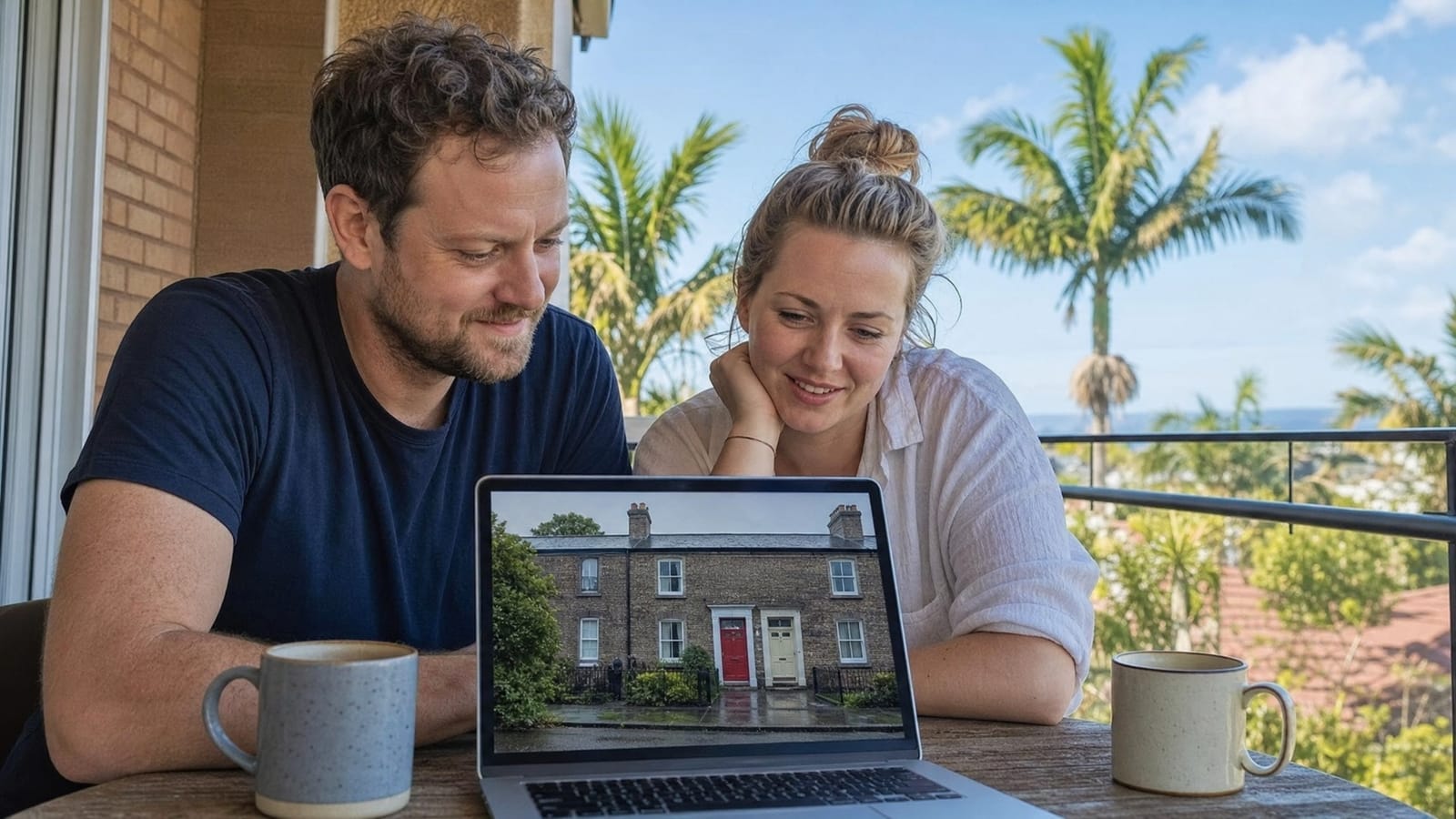
Yes, you can buy a house in Ireland while living in Australia: Citizens Information says there’s no residency-based restriction on buying there. The hard part is the mortgage. Irish lenders publish very little about applicants who live abroad and earn in AUD, and the main State schemes depend on Irish tax, Irish income or you living in the home.
Everything here was checked in November 2026 against official sources and lenders’ own pages. It’s general information, not financial advice, so speak to a mortgage broker or solicitor about your own case.
Short version
- Lenders differ. Bank of Ireland asks you to ring them, AIB’s documents cover non-euro income, PTSB’s published offer is for euro earners in the Eurozone, and Avant Money is residents only.
- Central Bank limits: 4 times income for first-time buyers, 3.5 times for other buyers, a 10% minimum deposit on a home and 30% on a buy-to-let.
- Tax paid in Australia doesn’t count for Help to Buy. It refunds Irish income tax and DIRT only, up to EUR 35,000.
- Australian income doesn’t count for a Local Authority Home Loan. The First Home Scheme has no income test, but you need a mortgage from AIB, Bank of Ireland or PTSB first.
- Ever bought a home in Australia? That generally rules you out of all three schemes.
- Renting it out? You need a collection agent in Ireland, or your tenant withholds 20% of the rent. You also file an Irish tax return every year.
Can I buy a house in Ireland from Australia?
Yes. Citizens Information confirms you can buy even if you don’t live in Ireland. Owning a home doesn’t give anyone the right to live there though, which matters if your partner is Australian. Our guide to moving back to Ireland covers that.
Can I get a mortgage in Ireland while living in Australia?
Possibly, but there’s no single rule. Getting a mortgage in Ireland while living abroad comes down to each lender’s policy, and most of that isn’t published. Here’s what they actually say, as of November 2026.
- Bank of Ireland’s mortgage page says that if you’re not living in Ireland but want a home (for now or later), an investment property or a holiday home in the Republic, phone 0818 200 346, or +353 1 2500 346 from abroad. The criteria aren’t published. Its document checklist adds a foreign credit bureau check if you’ve lived outside the Republic for a number of years.
- AIB has no non-resident page we could find, but if any income you’d use to repay isn’t in euro, it counts as a foreign currency loan. AIB can only handle one non-euro currency per application, and if you’ve been abroad you’ll need a Foreign Credit Check in English.
- PTSB’s published non-resident offer is a buy-to-let for Irish and British citizens in a Eurozone country, earning over EUR 75,000, all in euro. Someone paid in AUD in Australia doesn’t fit that, and we found nothing else published, so ask PTSB directly.
- Avant Money takes applications from residents of the Republic only, so that’s one for after you’ve moved home.
- MoCo and ICS Mortgages: we found nothing published on applicants abroad, so ask them or a broker.
We couldn’t find any of them publishing how AUD income is converted or discounted, or a deposit figure for someone living abroad. You’ll see 30% or 35% quoted on broker sites and blogs, but don’t plan around a number until a lender or broker confirms it.
If you’re moving home anyway, lenders say little beyond the paperwork. AIB suggests getting your Foreign Credit Check before you move, and in Australia you can get your credit report free every 3 months. We found nothing on how an Australian job counts towards a lender’s employment history, so ask before you hand in your notice.
Questions for a lender or broker
- Do you lend to someone living in Australia, or only once I’m back?
- Will you count my AUD income, and how do you convert it?
- What deposit will you want from me?
- Do I need an Irish job before drawdown? Does my Australian work history count?
- Can someone sign for me under a power of attorney?
The CCPC says most brokers earn commission from lenders, but non-resident cases may carry a fee, so check first.
How much can you borrow? The Central Bank limits
These are the Central Bank’s mortgage measures as of November 2026. They depend on the type of buyer, not where you live.
| Buyer | Limit |
|---|---|
| First-time buyer | Loan up to 4 times gross income, 10% minimum deposit |
| Second and subsequent buyer | Loan up to 3.5 times gross income, 10% minimum deposit |
| Buy-to-let | No loan-to-income limit, 30% minimum deposit |
Lenders can go above the limits on 15% of their first-time and second-time buyer lending and 10% of buy-to-let lending. These are ceilings, not promises, and lenders’ own credit policies apply on top.
Bank of Ireland and Avant Money both define a first-time buyer as someone who has never had a mortgage in Ireland or abroad, so an Australian home loan can put you in the 3.5 times group. If you’re buying to rent out while you’re away, expect the buy-to-let rules.
Help to Buy, First Home Scheme and local authority loans if you’ve paid tax in Australia
All three are for a home you’ll live in, and all three look at property you’ve bought overseas, not just in Ireland.
| Scheme | If your tax and income are Australian |
|---|---|
| Help to Buy | Australian tax doesn’t count. Only Irish income tax and DIRT do. |
| First Home Scheme | No income test, but you need a mortgage from AIB, Bank of Ireland or PTSB. |
| Local Authority Home Loan | Australian income doesn’t count. Only income from the Republic or Northern Ireland does. |
Help to Buy
Help to Buy refunds income tax and DIRT you paid in Ireland, towards a new build or self-build worth up to EUR 500,000. You get the lowest of EUR 35,000 (if you sign your contract, or first draw down a self-build mortgage, between 7 October 2026 and 31 December 2029), 10% of the purchase value, or the income tax and DIRT you paid in the 4 tax years before the year you apply. USC and PRSI don’t count.
- Your Australian tax is worth nothing here. Say you left in 2022 and move home in 2027. Apply that year and Revenue looks at 2023 to 2026, so unless you paid DIRT on Irish savings, your refund could be nil.
- Applying early won’t lock in older years. Revenue’s manual says an application expires on 31 December of the year you make it, or 31 March for one made from 1 October.
- You must be tax compliant. That means filing an Income Tax Return for each year you select, through myAccount or ROS. Revenue’s conditions don’t say you must be living in Ireland when you apply, but check with them if you’re in Australia.
- You must live in it as your main home for 5 years, so it won’t work for a place you’ll rent out. Move out early and Revenue claws it back: 100% in year 1, falling to 20% in year 5. Its manual allows for a temporary job relocation, but you still need 5 years there in total.
- You need a mortgage of at least 70% of the purchase value from a qualifying lender. Cash buyers don’t qualify, and a deposit above 30% could cost you the scheme.
- Owning abroad counts. You can’t have bought or built a home in or outside Ireland, and everyone buying with you must be a first-time buyer too.
First Home Scheme
The First Home Scheme funds up to 30% of a new home in return for a stake (20% if you also use Help to Buy). A service charge applies from year 6 if you haven’t bought the stake back.
Its published criteria have no income limit and no Irish tax test, so paying tax in Australia isn’t the barrier. The barriers are these:
- You need mortgage approval from AIB (including EBS and Haven), Bank of Ireland or PTSB, and must borrow the maximum available.
- You need a 10% deposit, and the home must be under the price ceiling for its area (EUR 375,000 to EUR 500,000).
- You need the right to live in Ireland, and you can’t have bought or built a home to live in, here or elsewhere. Divorce, separation and insolvency have a “fresh start” route.
- It must be your only residence, and renting it out isn’t allowed. The FAQ says working abroad can count as living there in limited circumstances, so ask the scheme.
Local Authority Home Loan
This government-backed mortgage covers up to 90% of market value on new or second-hand homes, with maximum values of EUR 310,000 to EUR 415,000 depending on the county. It’s not an option on Australian earnings, because only income from the Republic or Northern Ireland counts.
Once you’re home and earning, the other conditions include gross income up to EUR 80,000 (single) or EUR 85,000 (joint), two years’ continuous employment as the main earner, proof of insufficient offers from two regulated lenders, and no previous home ownership anywhere (fresh start and inheritance aside). Ask your local authority how Australian work counts.
How buying property in Ireland from Australia works
- Get a solicitor early. Compare charges, and use the Law Society search to find one.
- Get approval in principle. The CCPC says it typically lasts 6 to 12 months and isn’t a guarantee.
- Have someone view it. Estate agents act for the seller, and a seller doesn’t have to tell you about defects. Send someone you trust, and check sold prices on the Residential Property Price Register.
- Go sale agreed. You pay a holding deposit, typically EUR 5,000 to EUR 15,000, refundable up to signing. Neither side is bound yet.
- Get a survey. You can’t walk the place yourself, so this matters more. The Society of Chartered Surveyors Ireland lists members.
- Get full approval, then sign. If you sign and don’t get approval, you lose your deposit. The main deposit is usually 10% to 20% of the price, less your holding deposit.
- Close. You need home insurance and, with most lenders, mortgage protection, and your solicitor needs the stamp duty money. Sale agreed to closing typically takes 8 to 12 weeks.
Can’t fly home to sign? A general power of attorney under the Powers of Attorney Act 1996 lets someone you trust act for you. It’s different from an enduring power of attorney, which only takes effect if you lose capacity. We found no published rule on whether lenders accept one, so ask your solicitor and lender early.
What it costs
Typical figures from the CCPC, and stamp duty from Revenue, as of November 2026.
| Cost | Typical amount |
|---|---|
| Stamp duty | 1% up to EUR 1 million, 2% from there to EUR 1.5 million, 6% above that |
| Legal fees | EUR 950 to EUR 2,500 plus VAT |
| Land registry | EUR 400 to EUR 800 |
| Mortgage registration | EUR 175 |
| Valuation | EUR 150 to EUR 250 |
| Structural survey | Usually EUR 400 to EUR 800 |
So stamp duty on a EUR 400,000 home is EUR 4,000. Revenue’s rates don’t list a separate one for non-residents.
Moving your deposit from AUD to EUR
Your savings are in AUD and the price is in EUR. A 5% swing on AUD 100,000 is AUD 5,000. It doesn’t stop at closing either: repayments are in euro, and AIB warns that currency moves can make them harder to afford.
You’ll need the money in stages (holding deposit, main deposit, then the balance), so plan your transfers around them and compare how much euro actually lands. Two specialist providers we work with (we may earn a commission if you sign up):
- CurrencyFair: check the rate and the exact amount you’ll receive before you send. It publishes a flat fee of EUR 3 (or currency equivalent) per transfer out, plus a margin it says is typically around 0.53%, varying by currency.
- TorFX: worth a quote on a large sum like a house deposit. A forward contract can fix a rate up to two years ahead, but you’d miss out if the rate then moved your way, so ask what happens if the sale falls through. Its main site says it charges no transfer fees on top of the agreed rate.
Keep your records too: lenders usually want six months of account statements, including fintech accounts. Our money transfer guide has more.
Renting it out while you live in Australia: the tax basics
If you’re not resident in Ireland and rent out property there, you’re a non-resident landlord, and the rent is taxable in Ireland.
- Two ways to pay. You engage a collection agent, who must be resident in Ireland, or your tenant withholds 20% of the rent and pays it to Revenue.
- File every year. Under the withholding system you submit an Income Tax Return (Form 11) with all your income and claim the 20% as a credit.
- Register the tenancy with the RTB within 30 days of it starting, then every year. Local Property Tax is your job as owner too.
- If you’re an Australian resident for tax, the ATO says you declare overseas income even if it was taxed overseas, and you may be able to claim a foreign income tax offset for the tax you paid in Ireland.
- If you’re a temporary resident, the ATO says most foreign income isn’t taxed in Australia. That generally means you hold a temporary visa and neither you nor your spouse is an Australian resident under social security law.
Which group you’re in changes the answer, so get advice from a tax agent, ideally before you buy.
Coming home as well?
If the house is part of a bigger move, see our returning to Ireland guide, what to do when you’re leaving Australia and our guide to shipping from Australia to Ireland.
Thinking of buying at home? Ask in our groups, where you can hear from other Irish people in Australia.
FAQ
Can I get a mortgage in Ireland on Australian income?
Possibly. Bank of Ireland asks people abroad to phone, and AIB’s documents allow for one non-euro currency. Neither publishes how AUD income is assessed, so ask them or a broker.
How much deposit do I need to buy in Ireland from abroad?
The Central Bank minimum is 10% on a home and 30% on a buy-to-let. We found no lender publishing a figure for people living abroad.
Can I use Help to Buy if I’ve been paying tax in Australia?
Only against Irish income tax and DIRT from the 4 tax years before you apply. Australian tax doesn’t count.
Does owning a home in Australia stop me being a first-time buyer?
For Help to Buy, the First Home Scheme and the Local Authority Home Loan, generally yes.
Do I have to come home to buy?
Not necessarily. Someone can act for you under a general power of attorney, if your solicitor and lender accept it.
Will I pay tax in both countries on the rent?
Irish rent is taxable in Ireland. Australian tax residents also declare it to the ATO and may claim an offset, while temporary residents generally aren’t taxed on most foreign income.
General information only, not financial, legal or tax advice. Lender policies and scheme rules change, so check the linked pages and speak to a broker, solicitor or tax agent. Last checked November 2026.
Some links on this page are affiliate links, which means Irish Around Oz may earn a commission at no extra cost to you.