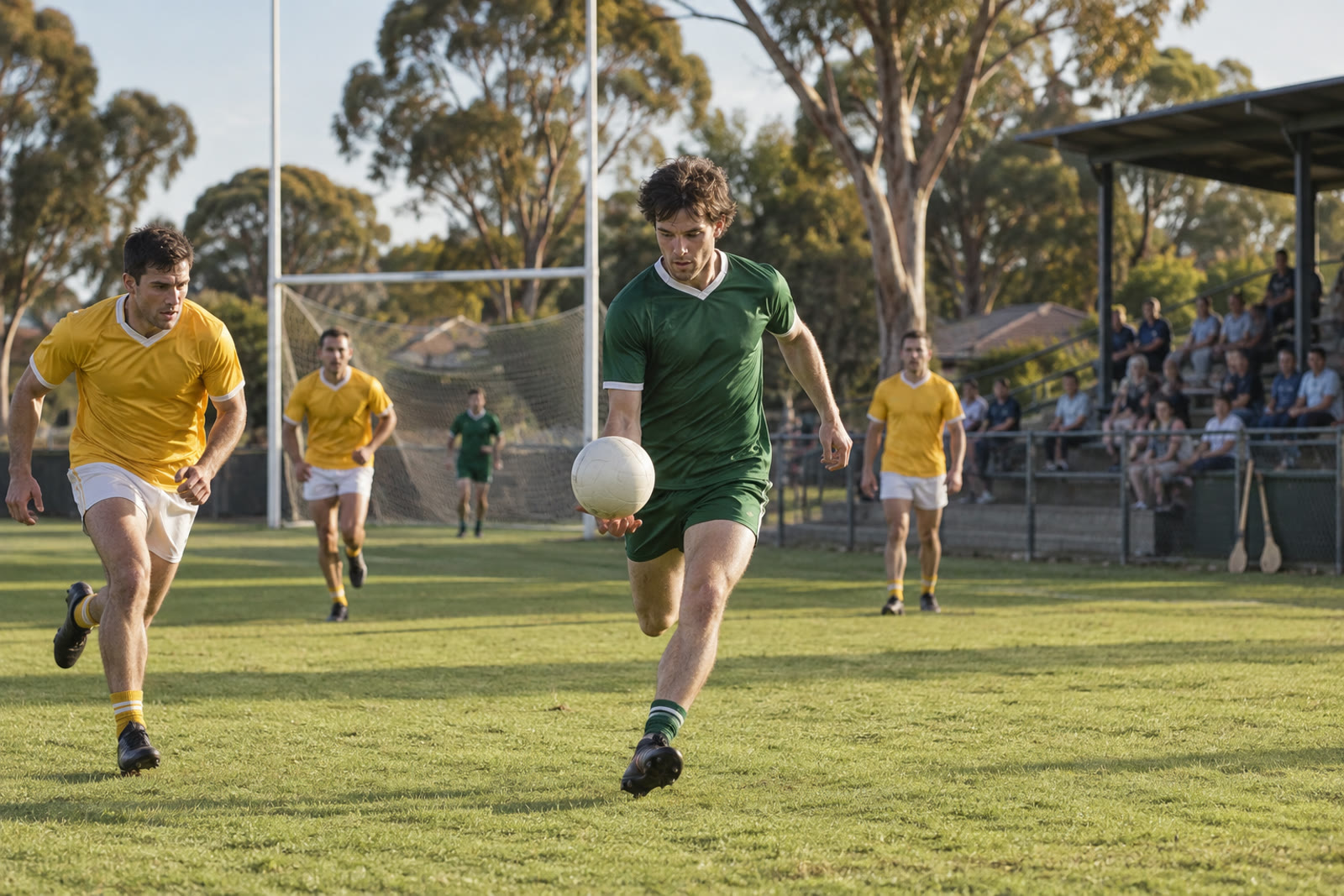
There are 57 GAA clubs in Australia on the official Australasia Gaelic Games list as of November 2026: 12 in Queensland, 12 in Western Australia, 11 in New South Wales (Canberra included), 11 in Victoria, 8 in South Australia, 2 in Tasmania and 1 in the Northern Territory. To join, message a club, get registered before your first game, and if you played at home, sort your transfer: men’s footballers and hurlers start it themselves on Foireann.
Below is every club, state by state, with what it plays according to its official club page, plus how the seasons run, how transfers work for football, hurling, ladies football and camogie, and the big tournaments. Everything comes from official GAA sources as of November 2026. Clubs come and go, so check the Australasia Gaelic Games club finder before you turn up.
Short version
- Who runs it: Australasia Gaelic Games (AGG) is the GAA’s governing body for Australia and New Zealand, with six state boards in Australia.
- 57 clubs in Australia: Queensland 12, WA 12, NSW and Canberra 11, Victoria 11, SA 8, Tasmania 2, NT 1.
- All four codes: men’s football, ladies football, hurling and camogie are all played, but no club in SA, Tasmania or the NT lists hurling or camogie.
- Timing: in 2026, Victoria’s league started in February, NSW, Queensland and WA played from about April to August, and SA and Tasmania play over the summer.
- Transfers: men’s football and hurling go through Foireann, ladies football needs an LGFA transfer form, and camogie has a six month sanction or a transfer.
- Big days: Pearse’s Sevens in Melbourne on Sunday 21 February 2027. The 2026 State Games were cancelled.
- The craic: some clubs say outright they’ll help newcomers with contacts for work and a place to live.
How GAA is organised in Australia
The GAA lists Australasia among its overseas units. The body is now called Australasia Gaelic Games (you’ll still see the older name, Gaelic Football & Hurling Association of Australasia), it was founded in Sydney on 15 June 1974, and it’s recognised by the Australian Sports Commission. It runs men’s football, ladies football, hurling and camogie, and says over 5,000 players take the field each year across Australia and New Zealand.
It works through nine regional affiliates: New South Wales, Queensland, South Australia, Tasmania, Victoria and Western Australia, plus Auckland, Canterbury and Wellington in New Zealand. Canberra Gaels are listed under New South Wales, and Darwin Shamrocks are the Northern Territory’s one club.
| State | Board and home ground |
|---|---|
| NSW and ACT | New South Wales GAA, formed in 1949. Since April 2026 it has its own home at Whalan Reserve, Blacktown, on a 50 year lease. |
| Victoria | Gaelic Games Victoria. The 2026 championship finals were at Gaelic Park, Melbourne. |
| Queensland | Queensland GFHA. The 2026 championships were played at Willawong, Brisbane. |
| WA | Gaelic Athletic Association of WA. Its website lists its football and hurling clubs and has the transfer forms. |
| SA | Gaelic Football & Hurling Association of South Australia. The 2025/26 grand finals were at St Mary’s Park, Adelaide. |
| Tasmania | Tasmania GFHA. Its state league is played in Hobart and Launceston. |
| NT | Not one of the nine boards. Contact Darwin Shamrocks directly. |
Ladies football and camogie run under the same structure out here. The LGFA’s rules say that where there’s no separate international ladies board, it recognises the GAA boards to run ladies football. Women’s football has been part of the Australasia Championships since 1995 and camogie since 2011.
GAA clubs in Australia by state
| State | Clubs on the official list (November 2026) |
|---|---|
| Queensland | 12 |
| Western Australia | 12 |
| New South Wales and ACT | 11 |
| Victoria | 11 |
| South Australia | 8 |
| Tasmania | 2 |
| Northern Territory | 1 |
| Australia | 57 |
That’s our count of the AGG club finder. AGG’s own 2026 to 2029 strategic plan, published in December 2025, counted 67 affiliated clubs across Australia and New Zealand in 2025. What each club plays comes from its AGG club page, AGG’s news and event pages, or the state board’s site. Each name links to the club’s website, or to the Facebook or Instagram page AGG or the state board links to.
GAA clubs in Sydney, NSW and Canberra (11)
| Club | Where and what it plays |
|---|---|
| Bondi Gaels | Sydney. Men’s and women’s football. |
| Canberra Gaels | Canberra. Men’s and women’s football, back in action in 2026 after several dormant years. |
| Central Coast | Sydney. Hurling, camogie and women’s football. |
| Clan na Gael | Sydney’s eastern suburbs. Men’s football, ladies football and camogie. |
| Cormac McAnallen’s | Sydney. Men’s and women’s football, hurling and camogie. |
| Craobh Phadraig | Sydney. Women’s football, hurling and camogie. |
| Hunter | Newcastle. Entered men’s and women’s football teams in the 2026 Regional Games. |
| Michael Cusacks | Sydney. Men’s and women’s football, hurling and camogie. |
| Penrith Gaels | Sydney. Men’s and women’s football. |
| Sydney Shamrocks | Sydney. Hurling. |
| Young Ireland | Sydney. Men’s and women’s football. |
Moving to Sydney? Our Irish in Sydney guide has the pubs, trad sessions and events too.
GAA clubs in Melbourne and Victoria (11)
| Club | Where and what it plays |
|---|---|
| Ballarat Clovers | Ballarat. Men’s and women’s football. |
| Garryowen | Melbourne. Men’s and women’s football, hurling and camogie. |
| Geelong Gaels | Geelong. Men’s and women’s football, hurling and youth teams. |
| Melbourne Shamrocks | Melbourne. Hurling and camogie. |
| Naarm Gaels | Melbourne. Youth club for ages 4 to 15: football, hurling and camogie. |
| Pádraig Pearses | Melbourne. Men’s and women’s football, hurling and camogie. Hosts the Pearse’s Sevens. |
| Peninsula Harps | Mornington. Youth club: football, hurling and camogie. |
| Sinn Féin | Melbourne. Formed in 1953, the oldest existing club in Australasia. Seven teams across all four codes. |
| St Kevin’s | Melbourne. Men’s and women’s football, hurling and camogie. |
| Wolfe Tones | Melbourne. Men’s and women’s football, hurling and camogie. |
| Young Melbourne | Melbourne. Men’s and women’s football, hurling and youth teams. |
More on the city in our Irish in Melbourne guide.
GAA clubs in Brisbane and Queensland (12)
| Club | Where and what it plays |
|---|---|
| Brisbane Harps | Brisbane. Men’s and women’s football, hurling and camogie. |
| Brisbane Souths | Brisbane. Men’s and women’s football. |
| Brisbane Youths | Brisbane. Youth football, hurling and camogie. |
| Cairns Chieftains | Cairns. Men’s and women’s football and hurling. |
| Easts Celts | Brisbane. Men’s and women’s football. |
| Emeralds | Brisbane. Hurling and camogie, Queensland champions in both in 2025 and 2026. |
| Four Mile | Port Douglas. Men’s and women’s football. |
| Gold Coast Gaels | Gold Coast. Men’s and women’s football and hurling. |
| John Mitchels | Brisbane. Men’s and women’s football. |
| Na Fianna | Brisbane. Hurling and camogie. |
| Queensland Masters | Brisbane. Masters men’s football. |
| Townsville Wolfhounds | Townsville. Entered men’s and women’s football teams in the 2026 Regional Games. |
The far north is growing fast. In November 2025, GAA.ie reported that Cairns Chieftains started in December 2022, and that North Queensland teams had registered 163 adult players since the start of the 2025/26 season. Handy if you’re up there doing your regional work. For the city, see our Irish in Brisbane and the Gold Coast guide.
GAA clubs in Perth and WA (12)
| Club | Where and what it plays |
|---|---|
| Bunbury Gaels | Bunbury. Gaelic football. |
| Greenwood | Perth. Men’s and women’s football. |
| Morley Gaels | Perth. Men’s and women’s football. Founded in 1975. |
| Na Fianna Catalpa | Perth. Men’s, women’s and youth football. |
| Perth Shamrocks | Perth. Hurling. |
| Sarsfields | Perth. Hurling. |
| Southern Districts | Perth. Men’s and women’s football. |
| St Finbarr’s | Perth. Men’s and women’s football. Founded in 1976. |
| St Gabriel’s | Perth. Hurling and camogie. |
| Tír Rua Perth | Perth. Youth club, formerly the Gaelic Games Junior Academy of WA. |
| Western Shamrocks | Perth. Men’s and women’s football. |
| Western Swans | Perth. Hurling and camogie. |
Heading west? Our moving to Perth from Ireland guide covers jobs, rent and the Irish scene.
GAA clubs in Adelaide, Tasmania and Darwin (11)
| Club | Where and what it plays |
|---|---|
| Adelaide Shamrocks | Adelaide. Women’s football. |
| Celtic Flames | Adelaide. Women’s football. |
| Flinders O’Neill | Adelaide. Men’s and women’s football. |
| Irish Australians | Adelaide. Men’s and women’s football. |
| Na Fianna | Adelaide. Men’s and women’s football. |
| Onkaparinga | Adelaide. Men’s football. |
| St Brendan’s | Adelaide. Men’s football. |
| Western Ireland | Adelaide. Men’s and women’s football. |
| Hobart Harps | Hobart. Men’s and women’s football. |
| Launceston Gaels | Launceston. Men’s and women’s football. |
| Darwin Shamrocks | Darwin. Men’s and women’s football. |
The first eight are South Australia’s clubs, then Tasmania’s two and the Northern Territory’s one.
How to join a GAA club in Australia
- Pick a club you can get to for training, near where you’ll live or work, not just the one your cousin played for.
- Message the club. Use the links above. Many AGG club pages also have a Send Email button.
- Get registered before you play. The Australasian rule book (2022 edition, on GAA WA’s site) says clubs must make sure players have paid their registration before their first game, through an online system. AGG’s plan is for every club to use Foireann, the GAA’s membership system, for registration and transfers by 2028, so have your login handy.
- Sort your transfer if you played for a club at home (next section).
- Ask about insurance. We couldn’t find an official GAA or AGG page setting out injury cover for players in Australia. Central Coast says its membership fees go towards costs including affiliation fees and insurance, so ask your club what’s covered, and check your own travel insurance covers you for sport.
Message two or three clubs and ask: when and where do you train, what does the season cost and what does that cover, do you have a team at my level, and do you help newcomers find work or a room? The answers tell you a lot about the club.
When the season starts
There’s no single national season. This is how 2026 ran, from AGG’s monthly calendars:
| State | 2026 season |
|---|---|
| Victoria | League from 15 February, championship from 31 May, finals in June. |
| NSW | League from about April (round 2 was 12 April), championship finals in August. |
| Queensland | League through April and May, hurling and camogie finals on 1 August, football finals later in August. |
| WA | Started with the Tim Hickey Sevens on 11 April, finals on 1 and 15 August. |
| SA | Summer season. The 2026/27 State League began on 18 October; the last grand finals were on 28 February. |
| Tasmania | Summer season. The 2026/27 State League began on 26 September in Launceston. |
| NT | Not in AGG’s calendars. Ask Darwin Shamrocks. |
So for Victoria, NSW, Queensland and WA, get in touch at the start of the year. For South Australia and Tasmania, it’s from about September. AGG’s own advice on every calendar is to check locally for dates, times and venues.
Transfers from your club at home
Men’s football and hurling: gaa.ie says transfers are made online through the GAA Player Transfer System in Foireann, and since December 2023 the player starts the application. The secretary of the club you’re joining approves it, then the GAA processes it. Moving to Australia counts as an overseas transfer, and Foireann’s help pages say that for an inter-county transfer the club or county you’re leaving has 10 days to object once the GAA has processed it, and you need to be registered at least three days before a game. The Australasian rule book says a male player from Ireland needs a transfer through the online system. The temporary sanctions on gaa.ie are for the US, New York, Canada and J1 students, and Australia isn’t on that list.
Ladies football: the LGFA’s rules say a player who wants to play under the Australasian board, temporarily or permanently, must complete a transfer form and send it to the National LGFA office in Dublin. GAA WA hosts the overseas transfer form, which your new club and state registrar sign; ask your club whether it now goes through Foireann instead. Going home later? The LGFA says you’ll need a transfer back to your old club.
Camogie: the Camogie Association’s official rules let you play abroad on a temporary CC6 sanction for up to six months in a calendar year, applied for on the official transfer system. Staying longer needs a transfer.
Don’t play until it’s through. Foireann warns that players who play while ineligible face severe penalties, and the Australasian rule book sets a three month suspension for playing without an approved transfer. Once you’ve picked a club, you can start it before you fly.
The big tournaments
- Australasia Championships (State Games): the interstate tournament held over three or four days in early October, with men’s and women’s football, hurling and camogie, regularly with over 500 players. The 2026 edition in Perth was cancelled because of too few team entries. Its future is up for discussion at AGG’s AGM on 5 December 2026.
- Australasia Regional Games: a seven a side club tournament of football and hurling each November, for regional clubs and city teams that are mostly non-Irish-born.
- Pearse’s Sevens: hosted by Pádraig Pearses at Gaelic Park, Melbourne, on Sunday 21 February 2027, across all four codes. The 2026 edition had more than 80 teams.
- Australasia Féile: the youth tournament, held every two years. The 2027 Féile is in Willawong, Brisbane. The event page gives both 27 and 28 February and the same weekend in March, so check before you book flights.
More than football: settling in through your club
AGG’s strategic plan describes Gaelic games as “a home away from home”, and some clubs put it in writing. Cormac McAnallen’s in Sydney lists one of its aims as being “a contact point and social network for those arriving in Australia for the first time”. In Perth, St Finbarr’s says it helps members where it can with contacts for work and accommodation and advice on visas. Central Coast in Sydney has a work, accommodation and visas page in its welcome pack, and welcomes new members whether they want to play or just want the social side.
You don’t need to have played before, either. The NSW GAA chair told GAA.ie that Dads and Lads and Gaelic for Mothers and Others have taken off, and Sinn Féin in Melbourne started Gaelic4Mothers&Others in 2025.
No official GAA or AGG page offers visa sponsorship for players, so treat any job that comes through a club like any other offer. For visa questions, talk to a registered migration agent through our visa help page. Looking for work while you settle in? Browse the Irish Around Oz job board, and if you’re still planning the move, start with our complete guide to moving to Australia from Ireland.
Not sure which club suits you? The groups are a good place to ask which club is near you, when they train and who’s short a corner back.
FAQ
How many GAA clubs are there in Australia?
57 on the Australasia Gaelic Games club finder as of November 2026. AGG’s strategic plan counted 67 affiliated clubs across Australia and New Zealand in 2025.
What GAA clubs are in Sydney?
Bondi Gaels, Central Coast, Clan na Gael, Cormac McAnallen’s, Craobh Phadraig, Michael Cusacks, Penrith Gaels, Sydney Shamrocks and Young Ireland, plus Hunter in Newcastle and Canberra Gaels.
Where can I play GAA in Perth?
WA has 12 clubs: seven football clubs (six in Perth, one in Bunbury), four hurling clubs in Perth, two of which also play camogie, and the Tír Rua youth club.
Are there hurling clubs in Australia?
Yes, in NSW, Victoria, Queensland and WA. No club in South Australia, Tasmania or the Northern Territory lists hurling on its official page.
Can I play ladies Gaelic football or camogie in Australia?
Yes. Women’s football is played in every state with a club. Camogie clubs are in Sydney, Melbourne, Brisbane and Perth.
Do I need a transfer to play GAA in Australia?
If you played at home, yes. Men’s football and hurling transfers start on Foireann, ladies football uses the LGFA transfer form, and camogie has a six month sanction or a transfer.
When does the GAA season start in Australia?
Victoria’s league started in February in 2026, and NSW, Queensland and WA ran from about April to August. South Australia and Tasmania play over the summer, starting in September or October.
Is there GAA in Canberra, Hobart or Darwin?
Yes. Canberra Gaels play under NSW, Tasmania has Hobart Harps and Launceston Gaels, and Darwin Shamrocks are the NT’s club.
Will a GAA club sponsor my visa?
We found nothing on official GAA or AGG pages about clubs sponsoring players. Some clubs help with work contacts, which is different. Talk to a registered migration agent about visas.