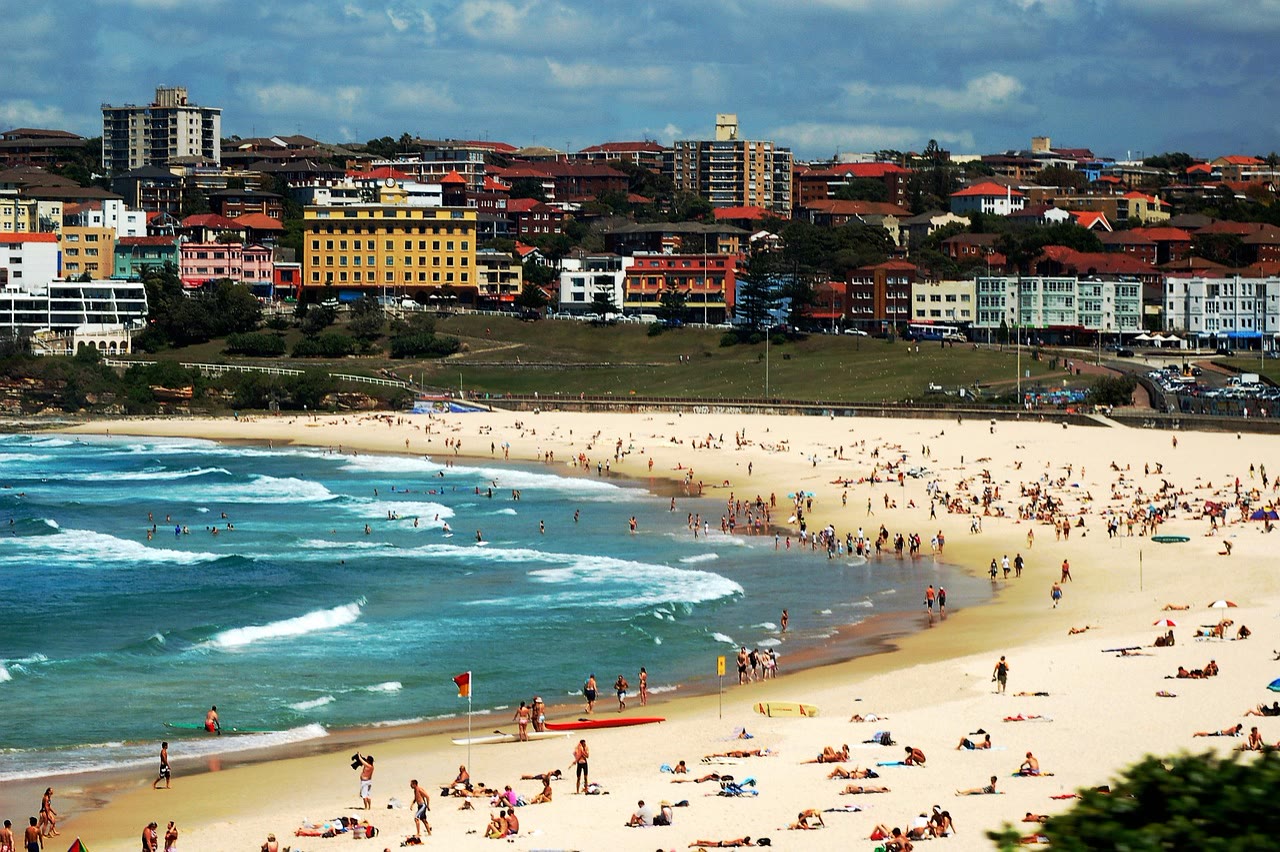
Yes, Australian beaches are safe if you swim at a patrolled beach, between the red and yellow flags, and you know what a rip current looks like. The real danger isn’t the sharks your mammy asks about. It’s rips, and swimming where nobody can see you.
The flags will look familiar, because they mean the same thing on an Irish beach. The water often won’t. This guide covers what you need to know before your first swim in Australia: how the beach flags work, how to spot a rip and get out of one, why the tide matters, and how to check tide times for free.
Short version
- Swim at a patrolled beach, between the red and yellow flags.
- No flags means no lifesavers on duty, and most Australian beaches have none.
- Look for rips before you go in: darker water, fewer breaking waves, sandy water heading out to sea.
- Caught in a rip? Stay calm, raise your arm and call out, float, and don’t swim against it.
- Check the tide and the swell as well as the weather. Rips tend to get stronger around low tide.
- In an emergency, call Triple Zero (000).
How dangerous are Australian beaches?
The numbers are worth knowing. In 2025/26, 313 people drowned in Australia, according to the National Drowning Report. Of those, 151 died at coastal locations like beaches, ocean and rocks, including 66 at beaches. Where country of birth was known, 39% of the people who drowned were born overseas, and Irish families have lost people to Australian water too.
Over summer 2025/26, Surf Life Saving Australia counted 50 coastal drowning deaths. 92% of them were men, and 66% happened more than 1 km from a surf lifesaving service. That’s the pattern to remember: most of those deaths happened away from lifesavers.
Surf Life Saving calls rips the number one hazard on Australian beaches. None of this means staying out of the water. Millions of people head to Australian beaches every summer and have a great time. It just means taking two minutes to read the beach before you run in.
Why an Australian beach isn’t like your local strand
On a lifeguarded Irish beach, red and yellow flags mark where the lifeguards are patrolling, and it’s the same in Australia. Two things are different.
First, most beaches have no patrol at all. Fewer than 5% of Australia’s roughly 11,000 beaches are patrolled, and many of those only in season. That stunning empty beach you find on a road trip is usually empty of lifesavers too.
Second, the sand moves. Rips can change shape and location quickly, so a spot that was grand last weekend might not be today.
Patrols also finish for the day. If the flags are gone, assume the lifesavers are too. Surf Life Saving’s free Beachsafe app and website show patrol status, hazards, weather, swell and tide for Australian beaches, so it’s worth having on your phone.
What the beach flags mean in Australia
| Flag | What it means |
|---|---|
| Red and yellow | The patrolled area, assessed as the safest place to swim. Stay between the flags. |
| Red | Beach closed. Don’t go in the water. |
| Yellow | Caution. There are potential hazards, so look for a warning sign. |
| Black and white | Riding area for surf craft like surfboards, canoes and kayaks. |
| Blue | Area reserved for surfing (listed in Queensland’s guide). |
| Red and white quartered | Emergency evacuation. Get out of the water immediately. |
That list comes from the Queensland Government and Surf Life Saving Queensland. Yellow and black diamond signs warn of hazards at that beach. If you see something you don’t recognise, ask a lifesaver. They’d much rather answer a question than do a rescue.
How to spot a rip current
A rip is a strong current that starts near the shore and runs away from the beach. Stand somewhere high for a few minutes before you go in, and look for:
- deeper or darker water
- fewer breaking waves
- sandy coloured water stretching out beyond the surf
- foam, seaweed or debris floating out to sea
- a choppy, rippled patch when the water around it is calm
Here’s an easy trick from Surf Life Saving Queensland: find where the waves are breaking consistently, then look to each side where they don’t. Those areas are rips.
The trap: a gap with no waves breaking can look like the calmest, easiest place to get in. That’s exactly why people walk into rips.
What to do if you’re caught in a rip
Rips move you away from the shore, they don’t pull you under. So the job is to save your energy. Surf Life Saving’s advice is:
- Stay calm.
- Raise your arm and call out. You may be rescued.
- Float with the current. It may bring you back to a shallow sandbank.
- Swim parallel to the beach or towards the breaking waves. You may escape the rip that way.
Don’t try to swim straight back against it, because that’s how you tire yourself out. If you see someone else in trouble, get a lifesaver or call 000.
Why the tide matters on Australian beaches
Most of us check the weather before a beach day. The tide is worth checking too, because it changes a beach in ways you won’t see from the car park.
Rips: Rip current safety guidance says a rip’s strength and speed will likely increase around low tide, and as the waves get bigger. That doesn’t make high tide safe, but a low tide with a decent swell is a good time to be extra careful.
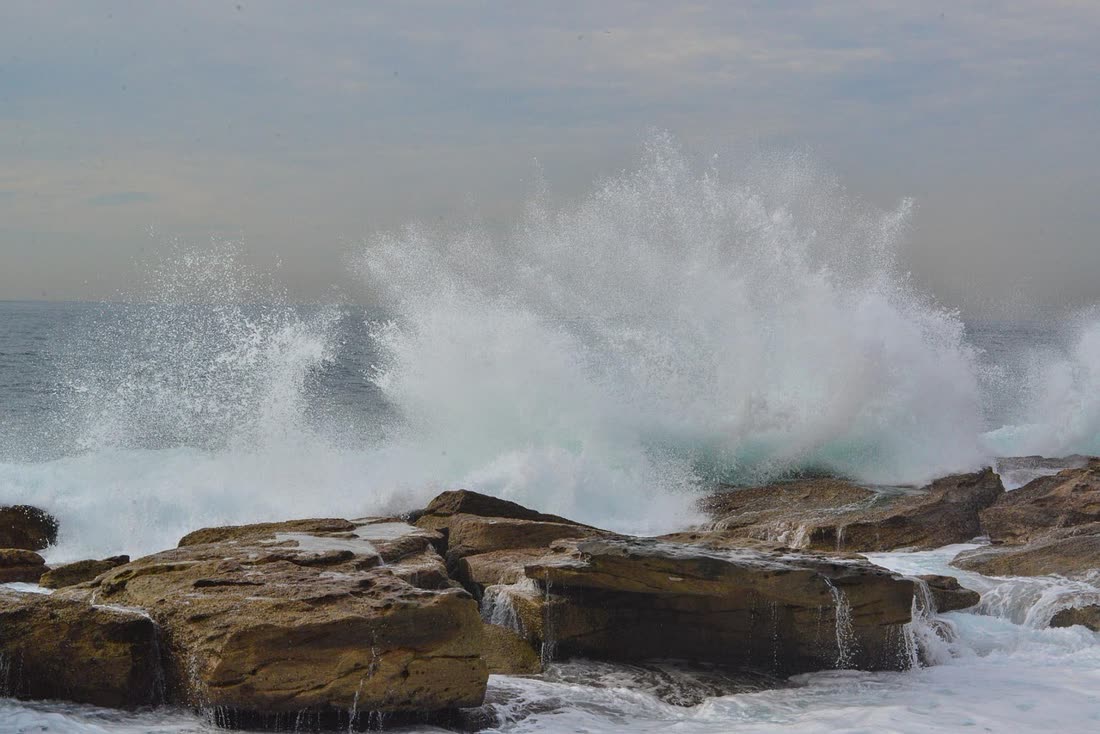
Rocks and pools: rock shelves that look harmless at low tide can be swept by waves. The Figure Eight Pools in Sydney’s Royal National Park are the famous example. NSW National Parks says access is only safe at low tide and when surf conditions are calm and flat, there’s no lifeguard, and you should never turn your back on the ocean. If you’re going rock fishing, Surf Life Saving’s advice is to wear a lifejacket.
Beach drives: on K’gari (Fraser Island), you can only do the Eastern Beach scenic drive two hours either side of low tide, and Queensland’s parks service warns that driving at high tide is dangerous. If you’re heading up the east coast, plan your days around the tide table, because tides get later each day.
How big the tide is depends on where you are. Here’s what the official tables show, with Dublin for comparison:
| Place | Tide heights in the official tables |
|---|---|
| Sydney (Fort Denison) | 0.14 m to 2.11 m (July 2026 to June 2027) |
| Dublin (North Wall) | 0.19 m to 4.35 m (2026) |
| Darwin | 0.17 m to 7.9 m (October 2025) |
| Broome | Highs of up to 10.38 m (2026) |
So Sydney’s tide is a small thing next to Dublin’s. Head north and it’s a different story, and you can’t judge a beach by how it looked when you arrived.
How to check tide times in Australia
The official source is the Bureau of Meteorology’s tide predictions, and states publish their own tables too, like the NSW tide tables. Use those for anything where your safety depends on the answer.
For a quick look on your phone, I should declare an interest. I run Irish Around Oz, I couldn’t find a good tide app, so I made one. It’s called tides.watch. It’s free, with no ads and no sign-up.
- Australian beaches: there are pages for 76 beaches and surf spots in Australia, including Bondi, Manly, Coogee, Byron Bay and Bells Beach.
- Anywhere else: press “Tides where I am” or search for your beach. Perth people can type in Cottesloe, for example.
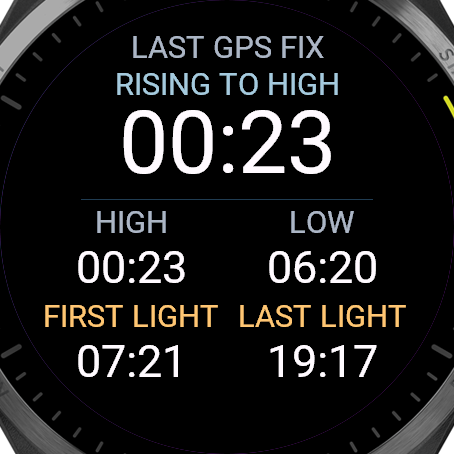
- What you get: high and low tide times and heights, whether the tide is rising or falling, a two-day chart, first and last light, plus waves and wind.
- On your wrist: there’s a free tides.watch app for Garmin watches, plus a Tide Field for your surf, swim or kayak screens. It works on Forerunner, fēnix, epix, Venu and vívoactive models and the Instinct 3 AMOLED, but not on the older Instinct surf editions. The Garmin page lists all 34 watches.
- Home for Christmas? It covers Irish beaches too, like Inch in Cork.
Please read this bit: tide predictions are estimates and don’t include storm surge. Don’t use tides.watch for navigation or as your only source of tide information. A tide time also tells you nothing about rips or whether a beach is patrolled, so check local conditions and swim between the flags.
What else to watch out for at the beach
- Marine stingers: box jellyfish and Irukandji are found in tropical Queensland waters all year, and the risk is higher from November to May. Swim at patrolled beaches, use stinger nets where they’re provided, and think about a full-body lycra suit. If you’re stung, call 000 and pour vinegar on the sting. Irukandji symptoms can take 20 to 40 minutes to appear, so if in doubt, get medical help.
- Bluebottles: the first aid is to remove any tentacles, rinse with sea water (not fresh), then put the sting in hot water for 20 minutes, no hotter than you can comfortably stand.
- Crocodiles: they live in fresh and salt water in northern Queensland. Swim only in designated safe areas. No warning sign doesn’t mean no crocodiles.
- Sharks: official advice is to swim between the flags, avoid dawn and dusk, stay out of murky water and swim with a buddy. If lifesavers sound a siren or ring a bell, get out straight away.
- The sun: Irish skin and Australian UV are not friends. Skin cancers account for 80% of all cancers diagnosed in Australia each year. Use SPF 30 or higher at least 20 minutes before you head out, reapply every 2 hours, and wear a hat and a long-sleeved lycra top.
- Drink: Surf Life Saving’s advice is to avoid alcohol and drugs around water, and not to go alone. Worth remembering on a Christmas Day at the beach.
If something goes wrong
Call Triple Zero (000), and tell a lifesaver if there’s one nearby.
It’s also worth sorting your cover before you need it. The Ireland and Australia health agreement covers less than most people think, and Medicare won’t pay for an ambulance. Our travel insurance guide explains the gaps. True Traveller is one option for working holiday makers, and if you plan to surf, check what your policy says about it first.
Moving soon? Our complete guide to moving to Australia and first week checklist cover the rest. Our city guides for Sydney, Melbourne, Brisbane and the Gold Coast and Perth will help you find your people.
The sea is always better with company. If you’re new to Australia and looking for people to go to the beach with, our free Facebook groups are the place to start.
FAQ
Are Australian beaches safe to swim at?
Yes, if you swim at a patrolled beach between the red and yellow flags. That area is watched by lifesavers and has been assessed as the safest place to swim. Take far more care anywhere else, because fewer than 5% of Australia’s beaches are patrolled.
Why are Australian beaches dangerous?
The main reason is rip currents, which Surf Life Saving calls the number one hazard on Australian beaches. Rips can be hard to see and can change shape and location quickly. Being far from lifesavers adds to the risk: 66% of coastal drowning deaths in summer 2025/26 happened more than 1 km from a surf lifesaving service.
What do the red and yellow flags mean in Australia?
They mark the part of the beach patrolled by lifesavers, which has been assessed as the safest place to swim. A plain red flag means the beach is closed.
What should you do if you get caught in a rip?
Stay calm, raise your arm and call out, float with the current, or swim parallel to the beach or towards the breaking waves. Don’t swim against it.
Are rip currents stronger at low tide?
Rip current safety guidance says a rip’s strength and speed will likely increase around low tide and as waves get bigger. A rip can be dangerous at any stage of the tide, so don’t treat high tide as safe.
Where can I check tide times in Australia?
The Bureau of Meteorology publishes official tide predictions, and states publish tables too. For a quick check on your phone, tides.watch is a free tide site with pages for 76 Australian beaches and a search for anywhere else.
Is there a free tide app for Garmin watches?
Yes. tides.watch is free on the Connect IQ Store and works on 34 Garmin watches, including Forerunner, fēnix, epix, Venu, vívoactive and Instinct 3 AMOLED models. It doesn’t work on the older Instinct surf editions.
When is stinger season in Australia?
In tropical Queensland, stingers are in the water all year, but the risk is higher from November to May.